


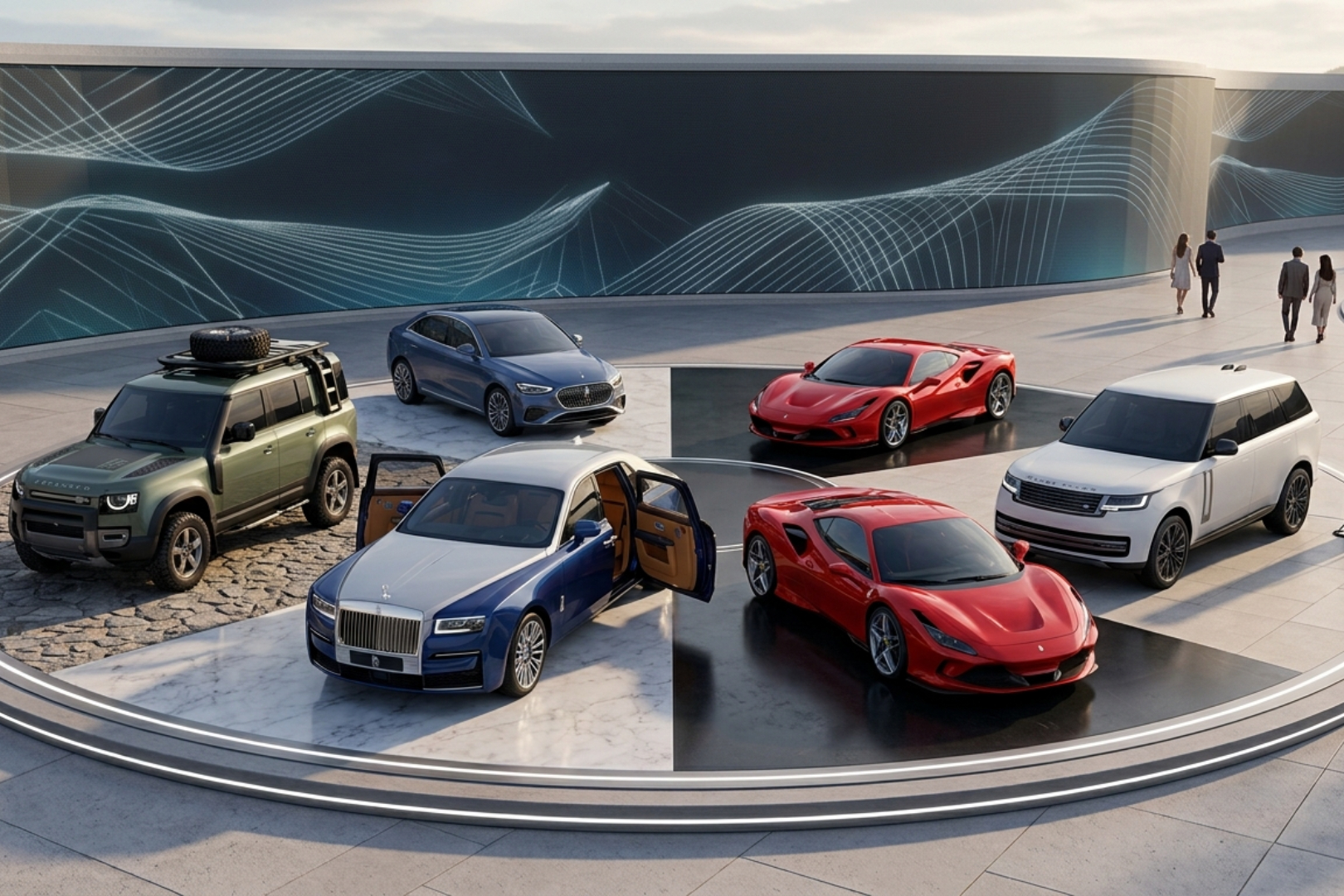
The automotive world is entering an exciting new chapter. The most anticipated cars of 2026 include everything from electric luxury SUVs to hybrid supercars and highly focused driver’s cars.
Manufacturers are also taking very different approaches to performance. Some are pushing electrification further, while others are preserving powerful combustion engines for as long as possible. At the same time, several exclusive models bring racing technology, bespoke craftsmanship and limited production numbers to the road.
With so many important launches expected, here are 26 new cars that deserve attention in 2026.
1. Land Rover Defender Sport
The Defender Sport is expected to bring the character of the iconic Defender into a smaller and more urban-friendly package. It is positioned below the full-size Defender while drawing on the rugged design and adventurous image associated with the name.
For drivers who find a traditional Defender too large for everyday city use, this smaller SUV could offer an interesting alternative. At the same time, its expected off-road ability should help distinguish it from conventional compact luxury SUVs.
The model is also expected to use a modified version of Land Rover’s MLA platform. With a projected starting price around £57,000, the Defender Sport could occupy an important position within the brand’s expanding SUV range.
2. Rolls-Royce Ghost Series II
The Ghost Series II represents an evolution of Rolls-Royce’s modern luxury saloon rather than a complete redesign. The focus is expected to remain on refinement, craftsmanship and a discreet approach to luxury.
Updates to the exterior styling, cabin technology and driving experience should give the model a more contemporary character. However, the essential Ghost formula remains intact: exceptional comfort combined with effortless performance.
Enhanced sound insulation is another important part of the experience. Rolls-Royce has traditionally placed enormous emphasis on creating a remarkably quiet cabin, allowing occupants to travel in an unusually calm environment.
3. All-Electric Bentley Bentayga
The arrival of an all-electric Bentley Bentayga would represent an important step in Bentley’s electrification strategy. The successful luxury SUV is expected to receive a fully electric powertrain while retaining the comfort and premium character associated with the Bentayga name.
Long-distance usability will be particularly important. Luxury SUV buyers increasingly expect electric vehicles to combine strong performance with practical range, and Bentley’s new model is expected to target both requirements.
The cabin should also benefit from advanced technology, including systems designed to manage energy consumption without sacrificing the comfort expected from a Bentley.
4. Range Rover Overfinch Holland & Holland Edition
Few luxury SUVs can match the exclusivity expected from the Range Rover Overfinch Holland & Holland Edition. This special project combines Range Rover luxury with the craftsmanship associated with two prestigious British names.
Only a very small number of vehicles are expected to be produced, with the proposed run limited to 25 examples. Buyers can expect bespoke materials, carefully finished wood and premium leather throughout the cabin.
Special storage solutions are also expected to reflect the vehicle’s sporting heritage. With an estimated starting price of around £400,000, exclusivity will be a central part of the model’s appeal.
5. Next-Generation Porsche 718 Cayman and Boxster
The next-generation Porsche 718 Cayman and Boxster could take a distinctive approach to the transition toward electrification. The new range is expected to combine electric versions with combustion-powered models, giving buyers different powertrain choices.
This strategy could appeal to traditional sports-car enthusiasts who still want the character of an internal-combustion engine. Meanwhile, electric versions should provide instant torque and the low centre of gravity associated with a battery-powered sports car.
The mid-engined architecture has always been central to the Cayman and Boxster driving experience. Therefore, preserving the platform’s balance and agility will be crucial as Porsche develops the next generation.
6. Gordon Murray T.33 Spider
The Gordon Murray T.33 Spider takes the lightweight philosophy of the T.33 and adds an open-air driving experience. Its naturally aspirated 3.9-litre Cosworth-developed V12 sits at the heart of a car designed around driver involvement.
A manual transmission option makes the Spider particularly interesting for enthusiasts who value direct interaction with a performance car. The combination of a high-revving V12, lightweight construction and an open cockpit creates a very traditional supercar experience.
Production is expected to be limited to only 100 examples worldwide. Each car is set to be hand-built in Surrey, reinforcing the model’s highly exclusive character.
7. Ferrari Amalfi
The Ferrari Amalfi is expected to add another distinctive character to Ferrari’s growing range. Although detailed specifications may vary as the model approaches production, the name suggests a strong connection with Italian grand touring.
The concept appears to focus on combining Ferrari performance with greater comfort and usability. As a result, the Amalfi could appeal to drivers looking for a car that works equally well on long journeys and demanding roads.
Its name also references Italy’s famous Amalfi Coast, giving the model an unmistakably Italian identity before it even reaches the road.
8. Aston Martin DBX S
The Aston Martin DBX S is expected to give the British luxury SUV additional performance and sharper dynamics. A twin-turbocharged 4.0-litre V8 provides the foundation for its performance-focused character.
Beyond outright power, the DBX S is expected to receive improvements to its chassis and suspension technology. Advanced adaptive suspension can help balance everyday comfort with greater control when driving more enthusiastically.
The interior should also offer additional technology and personalisation options. Consequently, the DBX S continues Aston Martin’s effort to combine SUV practicality with the brand’s distinctive sporting character.
9. Maserati MCPURA
The Maserati MCPURA builds on the foundations established by the MC20 while placing greater emphasis on agility and driver involvement. The model retains the brand’s Nettuno V6 but is expected to feature chassis changes and a more focused setup.
Weight reduction is an important part of the concept. By reducing unnecessary mass and refining the chassis, Maserati can create a car that feels more responsive without relying solely on additional engine power.
Limited production should further increase its exclusivity. For enthusiasts interested in Italian performance cars, the MCPURA could therefore represent a particularly focused interpretation of Maserati’s modern sports-car formula.
10. BMW M2 xDrive
The BMW M2 xDrive is expected to combine the compact dimensions of the M2 with the additional traction of all-wheel drive. This configuration should make the performance coupe more usable in changing weather conditions.
BMW’s intelligent system can prioritise the rear wheels during normal driving while sending torque forward when additional grip is required. Therefore, the car can retain much of the rear-driven character associated with BMW M models.
Power is expected to come from the S58 straight-six engine, with output above 450 bhp. That combination could give the M2 xDrive strong straight-line performance while preserving the compact dimensions that make the M2 appealing.
11. Jaguar GT
The Jaguar GT represents a major change in direction for the British manufacturer. Designed as a fully electric luxury grand tourer, it reflects Jaguar’s ambition to establish a new identity around premium electric vehicles.
The model is expected to use Jaguar’s JEA platform and could deliver around 575 bhp. A projected driving range of more than 400 miles would also make long-distance touring a central part of its mission.
Rather than simply converting an existing combustion model to electric power, the GT has been conceived around an electric architecture. This gives Jaguar the opportunity to rethink performance, packaging and aerodynamics from the beginning.
12. Porsche Cayenne Electric
The Porsche Cayenne Electric brings full electrification to one of Porsche’s most important SUV nameplates. The model is expected to use technology developed through Porsche’s experience with the Taycan.
Battery placement can provide a low centre of gravity, which is particularly useful for a performance SUV. Porsche is therefore expected to focus heavily on maintaining sharp handling alongside the instant response of an electric powertrain.
The use of an 800-volt electrical architecture should also support rapid charging. This could make the electric Cayenne a more practical option for drivers who regularly cover long distances.
13. Ferrari Luce
Ferrari’s move into fully electric production represents one of the biggest changes in the company’s modern history. The Ferrari Luce is expected to introduce an electric interpretation of the brand’s performance philosophy.
Developed at Ferrari’s facilities in Maranello, the project places significant emphasis on maintaining the driving characteristics associated with the marque. Engineers are expected to focus on weight distribution, aerodynamics and chassis behaviour rather than simply chasing maximum power.
The model also forms part of Ferrari’s wider investment in new manufacturing capabilities. This makes it significant not only as a new car but also as an important technological step for the company.
14. McLaren W1
The McLaren W1 represents the next generation of the manufacturer’s Ultimate Series. Its hybrid powertrain is expected to produce an extraordinary 1,275 bhp, making it the most powerful McLaren road car listed here.
Performance is equally remarkable. The W1 is designed to reach 124 mph from rest in approximately 5.8 seconds, while advanced aerodynamics help generate substantial downforce.
McLaren plans to build only 399 examples. That limited production, combined with its extreme performance, places the W1 firmly in hypercar territory.
15. Bugatti Tourbillon
The Bugatti Tourbillon begins a new chapter after the Chiron. Developed with Rimac involvement, the hypercar combines hybrid technology with a naturally aspirated 8.3-litre V16 engine.
The projected top speed is around 277 mph, placing the Tourbillon among the world’s most extreme road cars. However, outright speed is only part of the story.
The interior receives equally serious attention. Its instrument cluster draws inspiration from Swiss watchmaking, creating a cabin where mechanical precision and automotive engineering meet.
16. Bentley Supersports
The return of the Bentley Supersports name could produce one of the most performance-focused Continental GT variants in years. The concept combines Bentley’s traditional luxury with a stronger emphasis on driving dynamics.
The powerful W12 engine remains central to the model’s identity. Its performance-focused setup should provide more urgency than the standard grand-tourer versions.
The Supersports name also carries considerable history. Previous versions have represented the most sporting interpretations of Bentley’s Continental range, making its return particularly significant for enthusiasts.
17. Mercedes-AMG CLE 63
The Mercedes-AMG CLE 63 is expected to sit at the top end of the CLE performance range. Its combination of luxury coupe styling and serious performance makes it one of the notable upcoming AMG models.
A powerful twin-turbocharged V8 is expected to provide a dramatic soundtrack and strong acceleration. Meanwhile, the cabin should combine premium materials with AMG-specific technology and sporting details.
The CLE 63 is therefore designed around the grand-touring concept. It aims to provide long-distance comfort while offering the performance associated with Mercedes-AMG’s high-performance models.
18. Range Rover Electric
The Range Rover Electric brings the brand’s flagship luxury SUV into the electric era. Unlike many electric SUVs, it is expected to retain the off-road capability that has defined the Range Rover name for decades.
Battery and thermal-management technology will be particularly important. The vehicle must perform in a wide range of temperatures while maintaining the comfort, refinement and capability expected from the model.
The electric Range Rover is also expected to compete in the highest segment of the luxury SUV market. Its combination of premium design, electric performance and all-terrain ability makes it one of the most significant electric SUVs to watch in 2026.
19. Aston Martin Valiant
The Aston Martin Valiant represents a highly exclusive interpretation of the modern performance car. Created through the brand’s Q personalisation division, it combines bespoke design with racing-inspired engineering.
A 5.2-litre twin-turbocharged V12 provides the power, while the design draws inspiration from Aston Martin’s motorsport heritage. The result is a road-legal machine designed with far fewer compromises than a conventional grand tourer.
Production is expected to be limited to just 38 cars. Each example can therefore receive a high level of individual attention, reinforcing the Valiant’s coachbuilt character.
20. Porsche 911 (992.2) Turbo S
The Porsche 911 Turbo S continues the long-running tradition of combining everyday usability with supercar-level performance. The updated 992.2 generation is expected to deliver another step forward in performance and technology.
A twin-turbocharged flat-six remains at the heart of the car, with output expected to reach around 640 bhp. Acceleration from 0 to 62 mph is estimated at approximately 2.7 seconds.
The latest cabin technology should also improve connectivity and driver assistance. However, Porsche’s priority remains clear: the Turbo S must continue to work as a practical everyday sports car while delivering extraordinary speed.
21. Lamborghini Revuelto Roadster
The Lamborghini Revuelto Roadster takes the brand’s V12 plug-in hybrid flagship and removes the roof. The result is expected to provide an even more dramatic connection between driver, engine and surroundings.
Creating an open-top version of such a powerful car requires careful engineering. Lamborghini must preserve structural rigidity while integrating a roof mechanism that works smoothly without compromising the car’s distinctive proportions.
The Revuelto Roadster also represents an interesting combination of old and new technology. Its V12 character remains central, while hybrid assistance adds another layer of performance.
22. Porsche 911 (992) Speedster
The Porsche 911 Speedster has a special place in the company’s history. A new 992-generation version would continue that tradition with a lightweight, open-top interpretation of the iconic sports car.
Expected features include a low windscreen, a distinctive double-bubble rear cover and extensive weight-saving measures. These changes would give the Speedster a more focused character than a conventional 911 Cabriolet.
Production would likely remain limited, which would make the car particularly interesting to collectors and Porsche enthusiasts. More importantly, the Speedster formula places the emphasis on a direct and engaging driving experience.
23. Audi RS6 Hybrid
The Audi RS6 has become famous for combining family practicality with extraordinary performance. A hybrid-assisted version could take this formula further by combining a turbocharged V8 with electric assistance.
The hybrid system should add performance while helping improve efficiency in everyday driving. At the same time, the RS6’s estate-car practicality remains a central part of its identity.
This combination is what makes the model particularly interesting. Drivers can potentially use it for family trips and long journeys, then access much stronger performance when the road opens up.
24. Ferrari 296 Speciale and Speciale Aperta
The Ferrari 296 Speciale and Speciale Aperta sit at the top of our selection of the most anticipated cars of 2026. Based on the already impressive 296 GTB, these versions are expected to push the platform toward a more focused driving experience.
Ferrari is expected to make extensive changes to the aerodynamics, chassis and overall weight. These improvements should increase downforce and sharpen the car’s response without losing the balance that makes the 296 platform accessible to experienced drivers.
The Aperta variant adds an open-top dimension to the formula. As a result, it could provide an even more immersive experience while retaining the performance expected from a Ferrari mid-engined hybrid.
Technology developed through Ferrari’s Formula 1 and endurance racing programmes is also expected to influence the aerodynamic package. Limited production should further distinguish both versions from the standard 296 range.
25. Ferrari F80
The Ferrari F80 is positioned as the successor to the legendary LaFerrari. Its hybrid powertrain combines a 3.0-litre V6 with electric assistance to produce a combined output of around 1,200 horsepower.
Ferrari has also drawn on its motorsport experience when developing the technology behind the car. The hybrid system incorporates knowledge gained from the company’s endurance racing programme.
Production is expected to be limited to 799 examples. With such a small production run and an estimated price of around £3.1 million, the F80 sits firmly at the extreme end of Ferrari’s road-car portfolio.
26. Porsche 911 (992) GT2 RS
The next Porsche 911 GT2 RS is expected to take the 992 platform to an even more extreme level. Weight reduction, advanced aerodynamics and substantial power are all expected to play major roles.
The GT2 RS has traditionally represented one of the most demanding versions of the 911. Its development draws heavily on Porsche’s experience in motorsport, with aerodynamic solutions designed to provide greater stability and cornering performance.
This focus makes the GT2 RS fundamentally different from a conventional luxury sports car. Its purpose is to deliver maximum driver involvement and track-focused performance while remaining road legal.
What 2026 says about the future of performance cars
The new cars of 2026 reveal how quickly the automotive industry is changing. Electric power is moving into segments once dominated by combustion engines, while hybrid systems are becoming increasingly important in high-performance vehicles.
At the same time, manufacturers are still developing remarkable combustion-powered machines. V8, V12 and even V16 engines continue to appear in exclusive performance cars, although their availability is becoming increasingly limited.
Luxury manufacturers are following a similar pattern. Electric SUVs such as the Range Rover Electric, Porsche Cayenne Electric and Bentley Bentayga show how battery technology is moving into premium and performance-focused segments.
Meanwhile, models such as the Gordon Murray T.33 Spider, Porsche 911 Speedster and Ferrari 296 Speciale demonstrate that driver-focused cars remain an important part of the industry.