


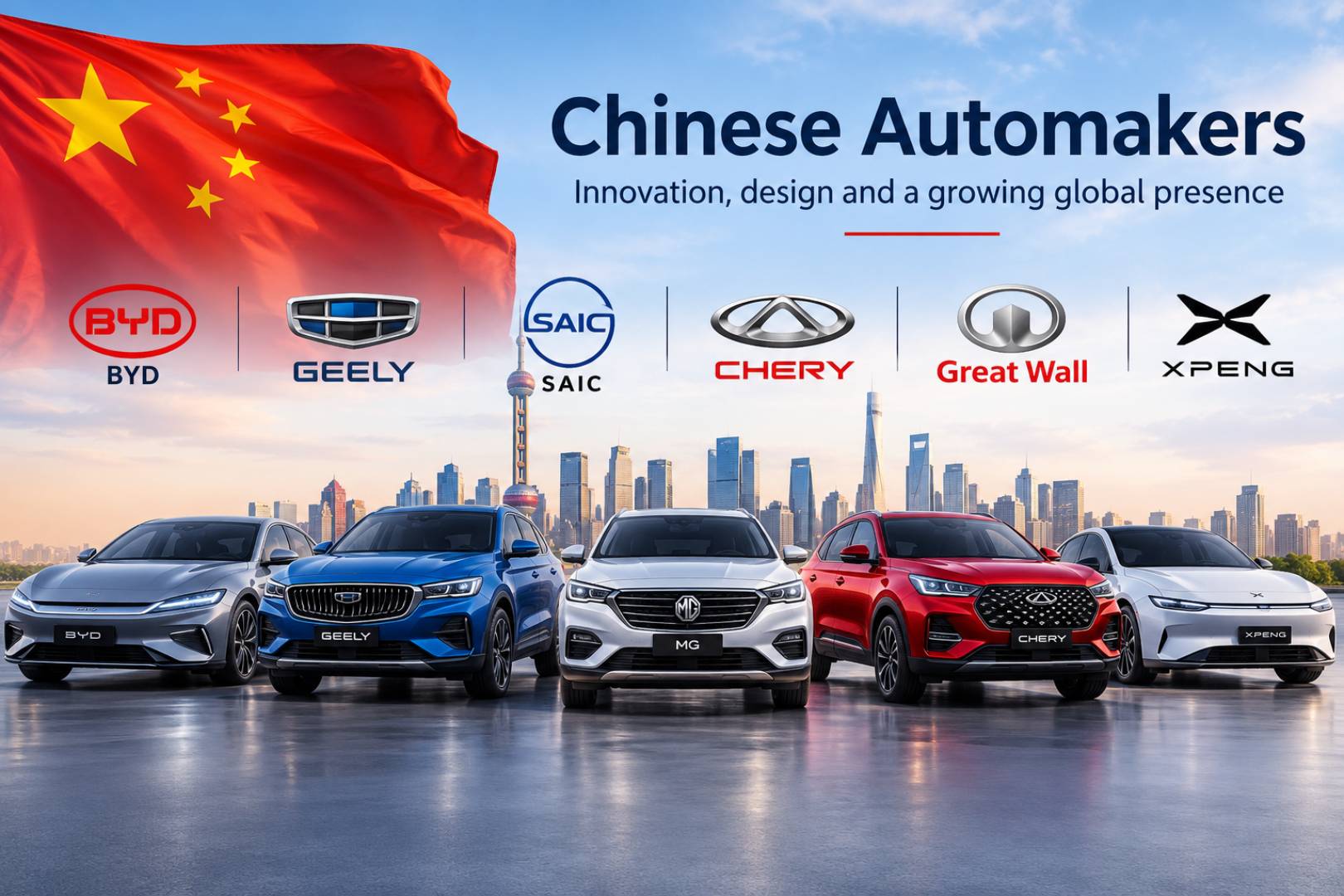
The global automotive industry is going through a major transformation, and Chinese automakers are playing an increasingly important role in this shift. For decades, established manufacturers from Europe, Japan, South Korea and the United States dominated international car markets. Today, Chinese brands are gaining attention across a growing number of countries with competitive prices, modern technologies and a rapidly expanding range of vehicles.
This development is particularly visible in the electric vehicle market. Chinese manufacturers have invested heavily in battery technology, electric drivetrains and connected vehicle systems. At the same time, they have expanded beyond their domestic market and are building a stronger presence in Europe, Asia, the Middle East, Latin America and other regions.
The rise of Chinese automakers is therefore not simply about selling more cars. It is changing competition, technology, pricing strategies and consumer expectations across the global automotive market.
The rapid growth of China’s automotive industry
China has become one of the world’s most important automotive markets and manufacturing centers. Its large domestic market has allowed local manufacturers to develop vehicles at significant scale while gaining experience with different technologies and consumer preferences.
Chinese automakers have also benefited from a strong ecosystem of suppliers. Battery manufacturers, electronics companies, software developers and component producers operate within a large industrial network. This environment can help manufacturers develop and introduce new vehicle technologies at a rapid pace.
As a result, several Chinese brands have moved from primarily serving the domestic market to competing internationally. Their expansion is gradually changing the balance of power within the automotive industry.
Electric vehicles are driving international expansion
Electric vehicles have become one of the main areas where Chinese automakers compete successfully on the international stage. Companies have invested heavily in battery production, electric motors, charging technology and vehicle software.
This focus has created an important advantage because electric vehicles require different technologies and manufacturing processes from traditional combustion-engine cars. Established manufacturers with decades of experience in conventional engines must adapt their production systems, while newer competitors can build their strategies around electric mobility from the beginning.
Chinese brands are consequently offering electric cars across several segments, including compact city cars, family vehicles, SUVs and premium models. Their growing presence gives consumers more choice and increases competitive pressure on traditional manufacturers.
Competitive pricing is changing consumer expectations
Price is another major factor behind the international expansion of Chinese automakers. Many Chinese brands have positioned their vehicles competitively, offering modern equipment without necessarily reaching the prices associated with some established premium manufacturers.
Consumers are increasingly comparing cars based not only on engine performance or brand reputation but also on technology, battery range, connectivity, interior equipment and overall value. Chinese manufacturers are responding to these expectations with vehicles that often include advanced digital features as standard equipment.
This approach can put pressure on competitors. Traditional automakers may need to reconsider pricing, equipment levels and development strategies in order to remain attractive in increasingly competitive markets.
Technology is becoming a key competitive advantage
Modern vehicles are becoming increasingly dependent on software and digital technologies. Chinese automakers have recognized this trend and are investing heavily in connected systems, digital dashboards, driver assistance features and intelligent vehicle functions.
Some manufacturers are also developing their own software ecosystems and integrating smartphones, navigation services and online applications into their vehicles. These features can make the car feel more like a connected digital product than a traditional mechanical machine.
Battery technology is another important area of competition. Improvements in energy density, charging speed and battery management can directly influence the appeal of electric vehicles. China’s extensive battery manufacturing industry gives its automakers an important position in this field.
Chinese car brands are expanding beyond China
The international presence of Chinese automakers has grown considerably. Brands are entering new markets through vehicle exports, partnerships, local distributors and, in some cases, investments in overseas production facilities.
Europe has become an important destination because of its growing electric vehicle market and increasingly strict emissions requirements. Chinese manufacturers are also expanding in Southeast Asia, Latin America, the Middle East and other regions where demand for affordable and technologically advanced vehicles continues to grow.
This expansion does not mean that every market will develop in the same way. Local regulations, import duties, consumer preferences and established dealer networks can influence how quickly a new brand gains market share.
Traditional automakers face new competitive pressure
The rise of Chinese manufacturers is creating new challenges for established automotive companies. European, Japanese, Korean and American manufacturers are competing against brands that can bring new models to market quickly and place strong emphasis on electric mobility and digital technology.
This competition is encouraging established automakers to accelerate their own electric vehicle programs. They are also investing in battery development, software platforms, manufacturing efficiency and new approaches to vehicle design.
The result is a more competitive automotive industry in which technological development is moving faster than before. Consumers may ultimately benefit from this competition through a wider selection of vehicles and more advanced features.
Design and brand perception are evolving
Chinese vehicles were once frequently associated with basic and inexpensive models. That perception is changing as manufacturers invest more in design, materials, technology and brand identity.
Modern Chinese vehicles increasingly feature distinctive exterior designs, refined interiors and sophisticated infotainment systems. Some brands are also positioning themselves in higher market segments rather than competing exclusively on price.
Building consumer trust remains an important challenge, particularly in markets where these brands are relatively new. Reliability, after-sales service, spare parts availability and long-term customer support will play an important role in determining whether international consumers remain loyal to these manufacturers.
Trade policies could influence the future
The international expansion of Chinese automakers is also connected to wider economic and political discussions. Governments in different regions are examining how imported vehicles affect domestic manufacturers, employment and industrial competitiveness.
Tariffs, import restrictions and local production requirements can therefore influence the growth strategies of Chinese car companies. Some manufacturers may respond by establishing production facilities closer to their target markets, while others may focus on partnerships with local companies.
These policies could significantly shape the global automotive landscape over the coming years. The industry will have to balance international trade, local manufacturing and the growing demand for affordable electric vehicles.
A more competitive global automotive market
The expansion of Chinese automakers is changing the global car market in several ways. It is increasing competition, accelerating the development of electric vehicles and encouraging manufacturers to place greater emphasis on software and connectivity.
For consumers, this transformation means more choices. Buyers can increasingly compare vehicles from a wider range of countries and brands, with different combinations of price, technology, design and performance.
For traditional automakers, the rise of Chinese competitors represents both a challenge and an opportunity. Companies that adapt quickly to changing consumer expectations and technological developments can remain competitive in the new automotive landscape.
The future of Chinese automakers in the global market
Chinese car manufacturers are no longer focused solely on their domestic market. Their growing international presence demonstrates how quickly the automotive industry can evolve when manufacturing scale, technology and investment come together.
Their long-term success will depend on more than competitive prices and electric vehicles. Brand reputation, safety, reliability, customer service, local production and the ability to understand different markets will become increasingly important.
One thing is already clear: Chinese automakers have become an important force in the global automotive industry. Their expansion is encouraging greater competition and accelerating changes that are likely to influence how cars are designed, manufactured and sold around the world.