


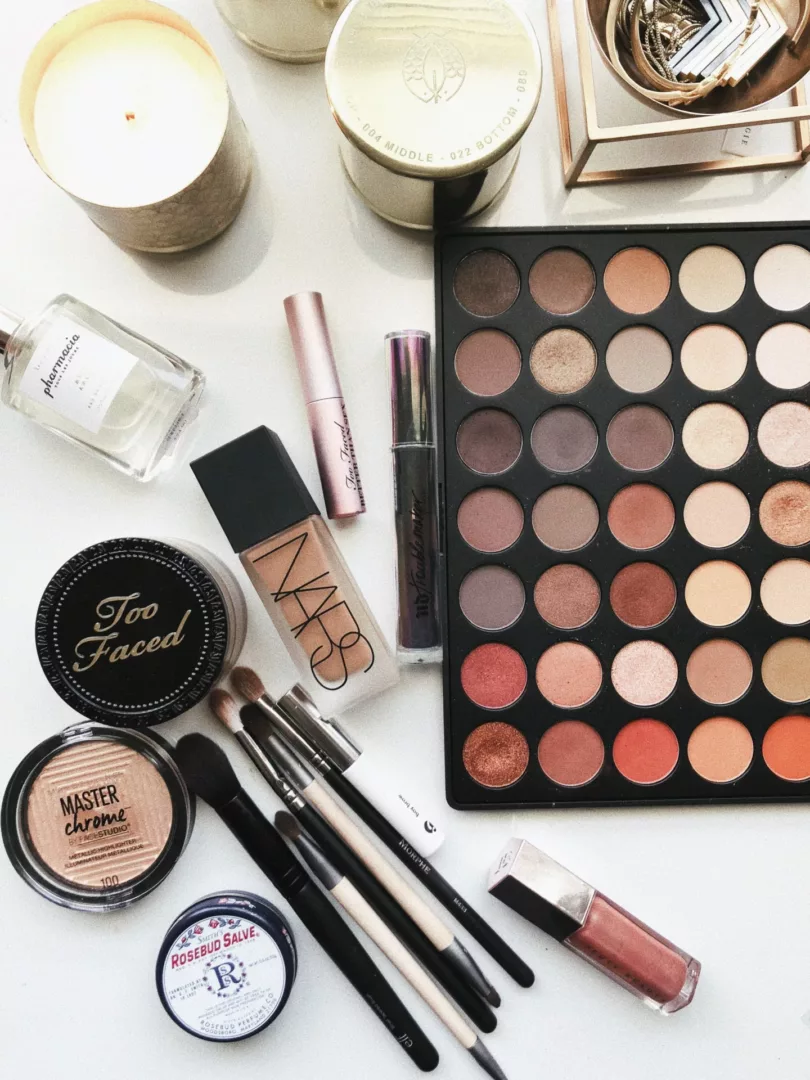
Choosing the right foundation color is essential for achieving a natural makeup look. The foundation should be the same color as your skin, neither lighter nor darker. It should blend naturally into the face, without creating differences in skin tone or visible demarcation, especially between the face and neck. Choose a yellow-based foundation because many people have warm or yellowish undertones. It should be noted that a predominantly pink foundation can create a mask-like effect. Foundation should not change your skin tone, but unify it!
Tip 1:
Don’t choose a foundation to look more tanned because a visible line may appear between your face and neck. For a sun-kissed effect, opt for a bronzer (also called sun powder or terra cotta) and apply it in a “3” shape on the face.
Using a large powder brush (flat or fan-shaped), apply the bronzer in light pats, starting from the temple, then following the hairline around the eye area. Move toward the cheekbones, then form the bottom of the “3” along the edge of the jaw. This application creates natural definition and catches the light on the face.
Tip 2:
Don’t choose a foundation lighter than your skin tone for a luminous effect. Instead, opt for a concealer two shades lighter than your skin tone (to apply before or after your foundation, depending on the desired result) and a highlighter to add touches of light to the prominent areas of the face, such as the Cupid’s bow, bridge of the nose, under the brow bone, and top of the cheekbones.
When it comes to foundation brands, several brands are committed to the planet, animals, and your skin. This is particularly the case with Avril, which offers a wide range of organic and vegan makeup.
Choose a foundation based on your skin tone: light, medium or dark
The first step in finding your foundation shade is knowing your skin tone. This will allow you to choose the right shade and find a foundation color that blends naturally with your complexion.
How do you know if your skin is pink or golden?
Generally, people with fair skin may have blonde or red hair and light eyes. People with medium complexions may have brown hair and green to hazel eyes. Finally, people with dark complexions often have brown to black hair and dark eyes.
So, do you have a medium, fair, or dark complexion?
The foundation shades to consider based on skin tone are as follows:
- Light complexion: Pinkish-beige tones can bring radiance and freshness;
- Medium complexion: Beige tones;
- Dark complexion: Golden tones.
Once your skin tone has been identified, all you have to do is determine your skin undertone to choose the right foundation color!
Identify your skin undertone to choose the right foundation color online
The second step when wondering how to choose your foundation is to identify your undertone. This is an important step that allows you to determine which shade is best suited to your complexion.
What are undertones?
There are three main families: warm, cool, and neutral. If it seems easy to identify your skin color, the notion of undertone can be less obvious. Skin color can vary depending on exposure to the sun, while the undertone remains relatively stable.
- If you have yellow or golden undertones, you have a warm undertone.
- If you have pinkish or bluish undertones, you have a cool undertone.
Finally, if none of the previous categories seem to suit you, or if you are hesitating between the two, you may have a neutral undertone.