


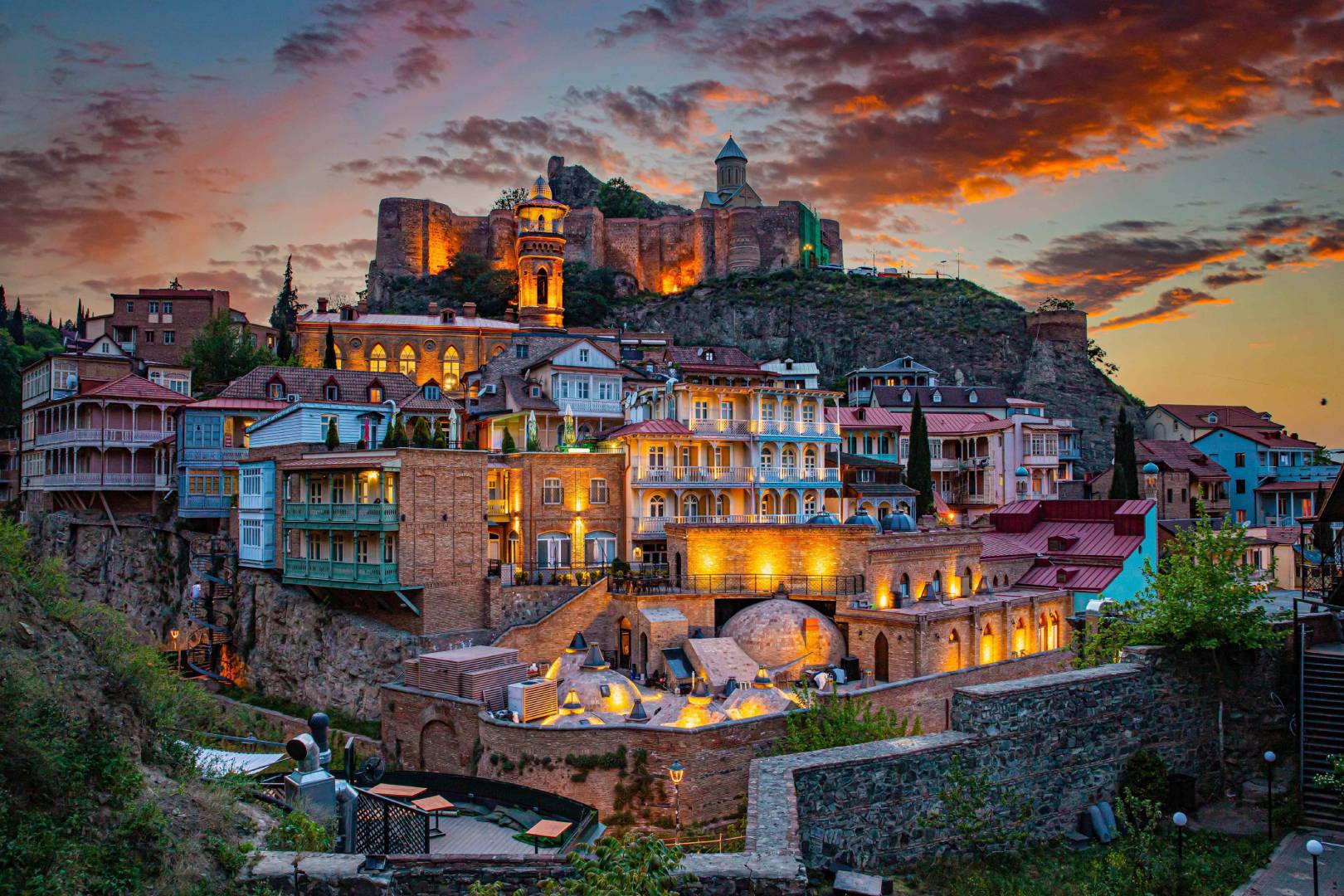
Georgia is a destination where ancient towns, dramatic mountain landscapes and generous food traditions come together in a remarkably diverse travel experience. Located between Europe and Asia, the country offers much more than a visit to its capital. From historic streets and medieval fortresses to winding roads through the Caucasus and long meals shared around a table, Georgia invites travelers to discover a culture shaped by centuries of history and regional traditions.
Discover Georgia Through Its Ancient Towns
One of the best ways to understand Georgia is to explore its historic towns. Their architecture, churches, fortresses and narrow streets reveal layers of history that have survived through centuries of political and cultural change.
Tbilisi and Its Historic Neighborhoods
Tbilisi is often the starting point for a journey through Georgia. The capital combines old stone streets, traditional balconies, ancient religious buildings and modern cafés. In the historic center, visitors can walk through winding lanes, discover small courtyards and admire the distinctive architecture of the city.
The contrast between old and new is part of Tbilisi’s character. Contemporary restaurants and creative spaces exist alongside historic buildings, creating an atmosphere that reflects the country’s evolving identity.
Mtskheta and Georgia’s Religious Heritage
Just outside Tbilisi, Mtskheta is one of Georgia’s oldest cities and an important center of Georgian Christianity. Its historic churches and monuments make it an essential stop for travelers interested in the country’s cultural heritage.
The town is particularly appealing because it can be explored at a slower pace. Its compact historic center allows visitors to combine cultural discoveries with views of the surrounding landscapes.
Sighnaghi and the Kakheti Region
In eastern Georgia, Sighnaghi is known for its picturesque streets, defensive walls and views over the Alazani Valley. The town is surrounded by the vineyards of Kakheti, one of Georgia’s most important wine-producing regions.
Its relaxed atmosphere makes Sighnaghi a natural destination for travelers who want to combine historic architecture, countryside and local cuisine.
Take the Mountain Roads Through the Caucasus
Georgia becomes particularly spectacular when the journey moves toward the mountains. The Greater Caucasus offers dramatic valleys, high peaks and remote communities connected by roads that can be as memorable as the destinations themselves.
The Georgian Military Highway
The Georgian Military Highway is one of the country’s best-known mountain routes. It connects Tbilisi with the Caucasus and passes through landscapes of forests, valleys, rivers and high mountain terrain.
Along the route, travelers can stop at viewpoints and historic sites before continuing toward the mountains. The road itself becomes part of the travel experience, especially for visitors interested in photography and scenic drives.
Kazbegi and the Mountain Landscape
The town of Stepantsminda, often associated with the name Kazbegi, is surrounded by some of Georgia’s most recognizable mountain scenery. The area is known for the Gergeti Trinity Church, dramatically positioned against the Caucasus mountains.
Beyond the famous viewpoint, the region offers hiking opportunities and access to quieter mountain landscapes. Weather conditions can change quickly at higher elevations, so travelers should plan mountain excursions carefully.
Svaneti and Remote Mountain Villages
For a deeper mountain experience, Svaneti offers a different side of Georgia. The region is famous for its medieval defensive towers, traditional villages and spectacular mountain scenery.
Mestia is the main base for exploring the region, while nearby villages provide opportunities to experience traditional architecture and rural landscapes. The journey to Svaneti can take time, but the scenery and distinctive cultural heritage make the region particularly rewarding.
Explore Georgia Through Its Food Culture
Food is one of the most memorable parts of traveling through Georgia. Georgian cuisine combines bread, cheese, vegetables, herbs, meat and walnuts in dishes that vary considerably from one region to another.
Khachapuri: Georgia’s Famous Cheese Bread
Khachapuri is one of the country’s best-known dishes. It is a traditional bread filled with cheese, with regional variations offering different shapes and ingredients.
The Adjarian version is particularly recognizable. It is shaped like a boat and traditionally topped with cheese, butter and an egg. Eating it fresh is an essential part of discovering Georgian cuisine.
Khinkali and Mountain Traditions
Khinkali are Georgian dumplings traditionally filled with meat, herbs and broth. They are especially associated with mountain regions and are commonly eaten by hand.
The experience is not only about the ingredients. The way khinkali are prepared and eaten reflects the social character of Georgian meals, where food is often shared around a large table.
Georgian Wine and the Ancient Qvevri Tradition
Georgia also has a remarkable wine culture. The country is widely associated with qvevri, large clay vessels traditionally used to ferment and store wine.
Wine production is particularly important in Kakheti, where travelers can visit vineyards, wineries and family producers. Tasting local wine alongside regional dishes offers another way to understand Georgia’s cultural traditions.
The Georgian Table Is Part of the Journey
Georgian food culture is not simply about individual dishes. Meals often have a strong social dimension, with numerous plates placed on the table for everyone to share.
The traditional supra, or Georgian feast, is an important part of this culture. A supra can include food, wine, conversation and a series of traditional toasts led by a tamada, or toastmaster.
For travelers, taking part in a local meal can provide a more personal perspective on Georgian hospitality than simply visiting restaurants. Food becomes a way to connect with people, traditions and regional identity.
Travel Beyond the Main Tourist Routes
One of Georgia’s strengths is the variety of experiences available outside its most famous destinations. Smaller towns and rural areas can reveal a quieter side of the country.
Travelers can explore local markets, stop in roadside cafés, visit family-run wineries or take short hikes through mountain villages. These experiences often require more flexibility than a conventional city itinerary, but they can also create some of the most memorable moments of a trip.
When Is the Best Time to Travel Around Georgia?
The best time to visit Georgia depends largely on the type of journey you want to experience.
Spring and autumn are particularly appealing for travelers interested in cities, cultural attractions, food and wine. Temperatures are generally comfortable, while the landscapes offer seasonal changes.
Summer is a popular period for mountain trips and hiking, although some destinations can become busier. Winter, meanwhile, offers opportunities for skiing and experiencing Georgia’s mountain resorts.
Because conditions can vary significantly between lowland cities and high mountain areas, it is important to consider the specific regions included in your itinerary.
How to Experience Georgia at a Slower Pace
Georgia rewards travelers who avoid rushing from one attraction to another. Instead of trying to cover the entire country in a few days, consider choosing a few regions and spending more time in each one.
A journey combining Tbilisi, Kakheti and the Caucasus can already provide a broad introduction to Georgian culture. Adding Svaneti or another mountain region allows travelers to explore a more remote side of the country.
Taking time for local meals, conversations and spontaneous stops can make the journey feel less like a checklist of attractions and more like an exploration of the country itself.
Why Georgia Is a Unique Travel Destination
Georgia brings together experiences that are rarely found in such a compact destination. Historic towns reveal the country’s long cultural history, mountain roads lead into dramatic landscapes, and food provides a direct connection to local traditions.
What makes the journey particularly memorable is the way these elements overlap. A road through the Caucasus can lead to a centuries-old village, while a day exploring vineyards can end with a traditional Georgian feast.
For travelers looking for a destination that combines culture, landscapes and gastronomy, Georgia offers an experience that goes well beyond conventional sightseeing.
Conclusion
Georgia is a destination best discovered through movement: walking through ancient towns, following mountain roads, stopping in rural villages and sitting down for long meals with local flavors.
From Tbilisi and Mtskheta to Kazbegi, Svaneti and the vineyards of Kakheti, each region adds a different dimension to the journey. The result is a travel experience shaped not only by places and landscapes, but also by food, hospitality and centuries of tradition.
Whether you are drawn to historic architecture, scenic road trips, mountain adventures or authentic culinary experiences, Georgia offers plenty of reasons to slow down and explore beyond the usual itinerary.