


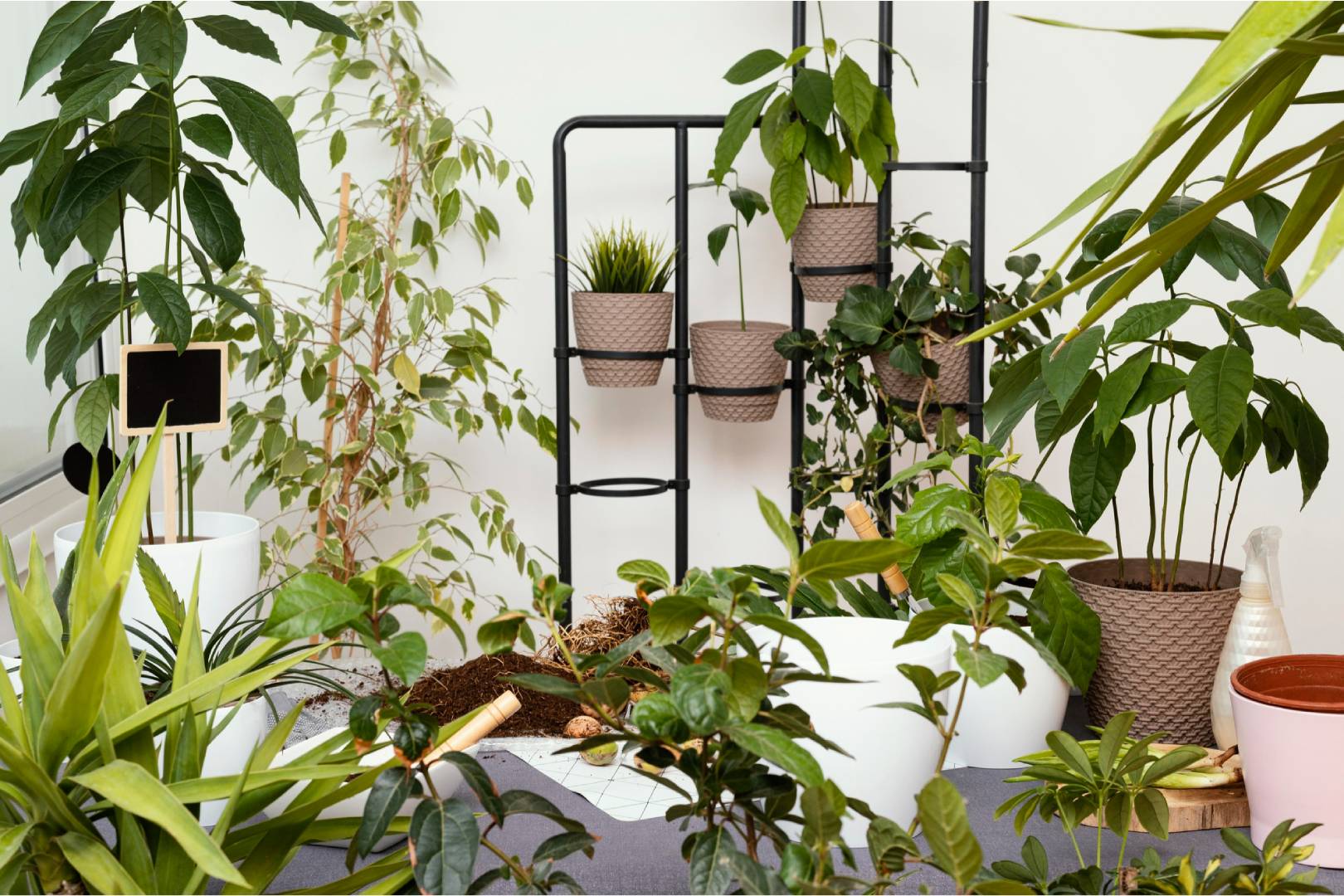
Bringing greenery indoors can completely change the way a room looks and feels. indoor garden ideas offer more than a way to display a few houseplants: they can help define spaces, add texture, create visual focal points and introduce a stronger connection with nature.
You do not need a large home, a conservatory or a dedicated garden room to create this effect. Plants can be incorporated into bookshelves, windows, corners, bathrooms, kitchens and living areas. The key is to treat greenery as part of the interior design rather than as an afterthought.
From a single statement plant to a layered collection of different heights and textures, there are many ways to build an indoor garden that complements your decorating style.
Why indoor gardens work so well in interior design
Plants naturally introduce color, texture and organic shapes into rooms dominated by straight lines and manufactured materials. A large plant can become a sculptural focal point, while smaller plants can fill shelves, tables and unused corners.
Interior designers also connect plant-filled interiors with biophilic design, an approach that brings elements of nature into indoor spaces. Plants, natural materials, daylight and visual connections with the outdoors can all contribute to this style.
Instead of treating plants as isolated decorative objects, consider them part of the overall composition of the room.
Think of plants as design elements
A plant can perform several decorating functions:
- Fill an empty corner.
- Add height to a room.
- Soften furniture with strong geometric lines.
- Create a visual transition between different areas.
- Add texture through leaves and stems.
- Become a focal point in a neutral interior.
- Help define a reading or relaxation area.
This approach makes it easier to choose plants and planters that work with the rest of your decor.
Create a green focal point in the living room
The living room is one of the easiest places to introduce an indoor garden. Instead of spreading small plants randomly throughout the space, consider creating one intentional green area.
A large statement plant can anchor an otherwise empty corner. Architectural plants and larger specimens can work as sculptural elements within interiors.
Place a tall plant beside a sofa, armchair, console or window. Then introduce two or three smaller plants nearby to create different levels.
Layer plants at different heights
An effective indoor garden does not have to contain dozens of plants. Variation is often more important than quantity.
Try combining:
- A tall floor plant.
- A medium-sized plant on a stand.
- Smaller plants on a shelf or side table.
- A trailing plant positioned above eye level.
Different heights create depth and make the arrangement feel more intentional. Combining different shapes, textures and heights can also create a more layered indoor garden.
Turn a window into an indoor garden
Windows provide an obvious opportunity to bring greenery into an interior. A collection of plants around a bright window can create the feeling of a small garden without requiring outdoor space.
Combine hanging planters with pots placed on shelves, stands or other suitable surfaces. Mixing leaf shapes and plant sizes can make the display more dynamic.
However, the available light should guide your plant choices. Plants should be selected according to the conditions of the specific room rather than simply according to their appearance.
Make the window part of the composition
Rather than blocking the entire window, use plants to frame it.
For example, a taller plant can occupy one side while smaller plants create a gradual transition toward the center. This keeps the window visually open while making the greenery feel integrated with the architecture.
Use shelves to build a vertical indoor garden
Shelving is particularly useful when floor space is limited. A bookshelf, open cabinet or wall-mounted shelving system can become a small vertical garden.
Place smaller plants between books, decorative objects and other accessories. Cacti and succulents can work particularly well on shelves because their compact forms can complement small decorative arrangements.
For a more natural composition, avoid placing every pot at exactly the same height.
Instead, alternate:
- Small and medium plants.
- Upright and trailing forms.
- Different pot shapes.
- Plants and decorative objects.
This creates a more relaxed and layered display.
Define a quiet corner with plants
An indoor garden can also help create zones within an open-plan room.
A group of plants can visually separate a reading chair from the rest of a living area without requiring a solid partition. This creates a softer transition while preserving the openness of the room.
A comfortable chair, a small table and several plants can therefore create a dedicated green retreat within an ordinary room.
Bring plants into the kitchen
The kitchen is another natural location for an indoor garden.
Instead of creating a large collection of ornamental plants, consider a smaller arrangement that works with the room’s practical functions. Plants can be displayed near a suitable window or incorporated into open shelving.
A kitchen window can also become a compact growing area, while pots and natural materials can reinforce a warm, organic decorating scheme.
The goal is not to cover every available surface. A carefully positioned group can have more visual impact than a cluttered collection.
Create a greener bedroom
Plants can bring softness to bedrooms, particularly when the rest of the interior uses neutral colors and natural-looking materials.
A large plant can occupy an unused corner, while smaller plants can be incorporated into existing furniture or shelving where appropriate.
The overall arrangement should remain visually calm. Rather than creating a dense jungle effect, select a few plants that complement the bedding, furniture and lighting.
Natural materials such as wood, linen, rattan and stone can reinforce the connection between greenery and the rest of the interior.
Transform a bathroom with greenery
Bathrooms can also benefit from an indoor garden approach.
A collection of suitable plants can introduce a more natural feeling to a room that often contains hard surfaces such as tile, glass and ceramic.
Where the conditions allow it, plants with a preference for humid environments can be incorporated into the space. The important consideration is to match the plants to the available light and environmental conditions.
The result can be especially effective when greenery is combined with natural-looking finishes and organic textures.
Choose planters that complement your decor
The plants themselves are only one part of an indoor garden. Planters can either strengthen the design or make the collection feel disconnected from the room.
Natural materials such as terracotta, stone, raw ceramic and other earthy finishes can complement greenery particularly well. Large architectural plants can also work effectively with containers made from natural-looking materials.
Match the planter to the interior style
Consider the relationship between the pot and the surrounding furniture.
- Terracotta can reinforce a warm, earthy interior.
- Ceramic can work with both contemporary and traditional spaces.
- Natural woven textures can complement relaxed interiors.
- Stone-inspired finishes can create a more substantial look.
- Simple neutral planters can keep attention on a statement plant.
Using a related material or finish across several planters can make a collection feel more cohesive.
Combine plants with natural materials
An indoor garden becomes more convincing when plants are supported by other natural elements.
Wood, stone, wool, linen, rattan and similar materials can help reinforce the visual relationship between the interior and the natural world. Biophilic design commonly combines living plants with natural materials, daylight and organic forms.
You can introduce these elements without redesigning the entire room.
A few changes may be enough:
- Add a wooden side table beside a large plant.
- Introduce a natural-fiber rug.
- Use woven baskets as decorative storage.
- Choose linen textiles.
- Add ceramic or stone accessories.
This creates a consistent design language rather than making plants look like isolated accessories.
Make a small indoor garden in a limited space
A lack of floor space does not mean you have to abandon the idea.
Small homes can use vertical surfaces, shelves, window areas and hanging displays to create a garden effect. Even a tray can become a miniature indoor garden by arranging a taller plant in the center and smaller plants around it.
Use vertical space
When floor space is limited, look upward.
Wall shelves, hanging planters and tall plant stands can distribute greenery vertically. This can create the impression of a larger collection without occupying the entire floor.
The same principle works in compact apartments, home offices and small bedrooms.
Avoid creating a cluttered indoor jungle
More plants do not automatically create a better interior.
One common mistake is adding plants to every available surface until the room loses its visual structure. Instead, create a hierarchy.
Choose one dominant plant or green area, then use smaller plants to support it.
A good arrangement can include:
- One main focal plant.
- A few secondary plants.
- Different heights.
- Related planter materials.
- Enough empty space around the arrangement.
Leaving some surfaces clear allows the plants to stand out.
Choose plants according to the room
A successful indoor garden has to work as a living environment, not just as a visual concept.
Light conditions should influence your choices. A plant that looks perfect in a photograph may not be appropriate for a darker room.
Before creating a plant display, consider:
- How much natural light the room receives.
- Where the windows are positioned.
- How much space is available.
- Whether the plants will be easy to access.
- How much maintenance you can realistically provide.
A biophilic interior works best when living plants are matched to the actual light conditions of the space.
Use indoor gardens to strengthen biophilic interior design
An indoor garden can become part of a broader biophilic interior design strategy.
The concept goes beyond simply adding plants. It can involve visual connections with nature, natural materials, daylight, organic shapes and other elements that make an interior feel more connected to the outdoors.
This makes indoor plants particularly useful in decorating because they can connect several design elements at once.
A room with greenery, natural textures and strong daylight can feel visually different from one dominated by artificial materials and rigid forms.
Simple indoor garden ideas to try today
You do not need to renovate your home to experiment with this decorating approach.
Start with one of these ideas:
- Place a large plant in an unused living-room corner.
- Turn an open bookshelf into a small plant display.
- Create a green arrangement around a bright window.
- Combine hanging and potted plants.
- Use plants to define a reading corner.
- Create a miniature garden on a tray.
- Add greenery to an open kitchen shelf.
- Introduce natural-material planters.
- Group plants at different heights.
- Pair greenery with wood, linen or rattan.
The best approach is to start small and observe how the plants interact with the room.
Conclusion
The best indoor garden ideas do not simply add more plants to a home. They use greenery intentionally to shape the atmosphere, define spaces and complement furniture, materials and natural light.
Whether you create a dramatic living-room focal point, a compact window garden or a layered shelf display, plants can become an integral part of the interior rather than an afterthought.
Start with the space you already have, identify where greenery could improve the composition, and choose plants and planters that work with the existing conditions. A thoughtful arrangement can make even a small interior feel more natural and visually connected to the outdoors.